
Dachshund Pit Bull Mix: Size, Temperament, Health & Adoption Guide


A dachshund pit bull mix, often called a Doxie Pit, can be one of the most loving dogs you’ll ever meet. But this cross hides a health risk that most owners only discover at the vet, and a label that can follow your dog into your lease and insurance policy. Read on before you fall in love with one.
Is this muscle-bound sausage dog your perfect match? The answer depends on things that never show up in puppy photos.
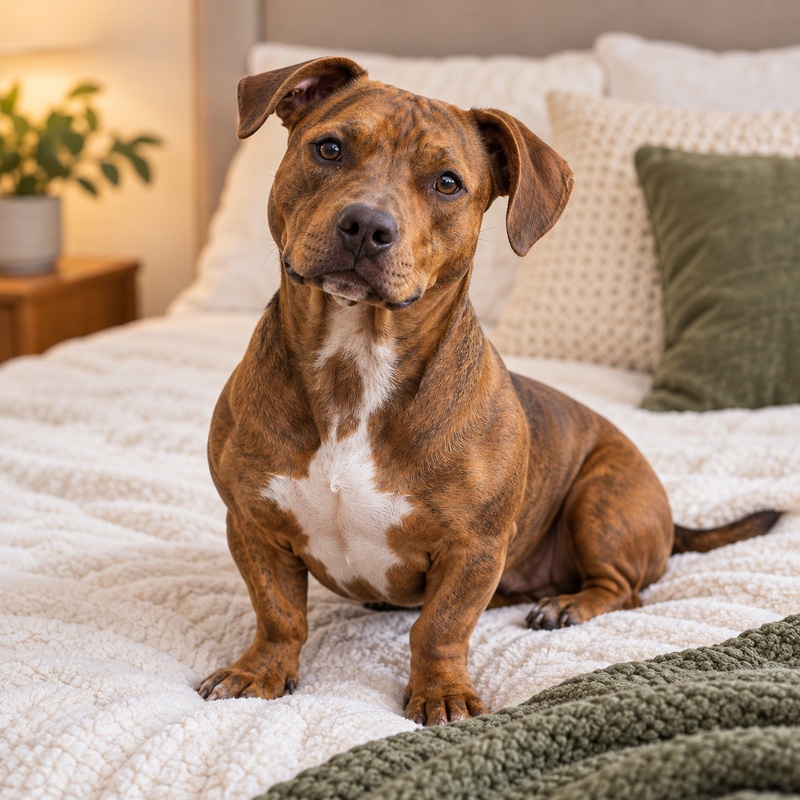
Picture a pit bull’s broad grin and muscular chest on a dog built low to the ground, with a dachshund’s long body and nosy attitude. That’s the dachshund pit bull mix, and it stops people in their tracks.
We dug through breed standards, genetics research and vet studies to find out what living with one is really like. Let’s start with where this unusual mix comes from.
What Is a Dachshund Pit Bull Mix?
It’s a cross between a dachshund and a pit bull-type dog. The dachshund comes from Germany, where the name means “badger dog.” It was bred to follow badgers into their burrows. The American Pit Bull Terrier descends from 19th-century bulldog and terrier crosses from Britain and Ireland, and later worked on American farms catching semi-wild cattle and hogs.
You’ll see this pit bull dachshund mix called a Doxie Pit, Pitshund, Weeniebull, or Bullweiner. Most are first-generation crosses, so puppies from one litter can look very different.
One thing to know up front: “pit bull” is a loose label, not one breed. It’s used for American Pit Bull Terriers, American Staffordshire Terriers, Staffordshire Bull Terriers and lots of muscular mixed-breed dogs. In a study of 120 shelter dogs published in The Veterinary Journal, shelter staff labeled more than one in three dogs with no pit bull-type DNA as “pit bull type.” So a rescue dog listed as a “pit/dachshund mix” may be something else entirely. A DNA test is the only way to know.
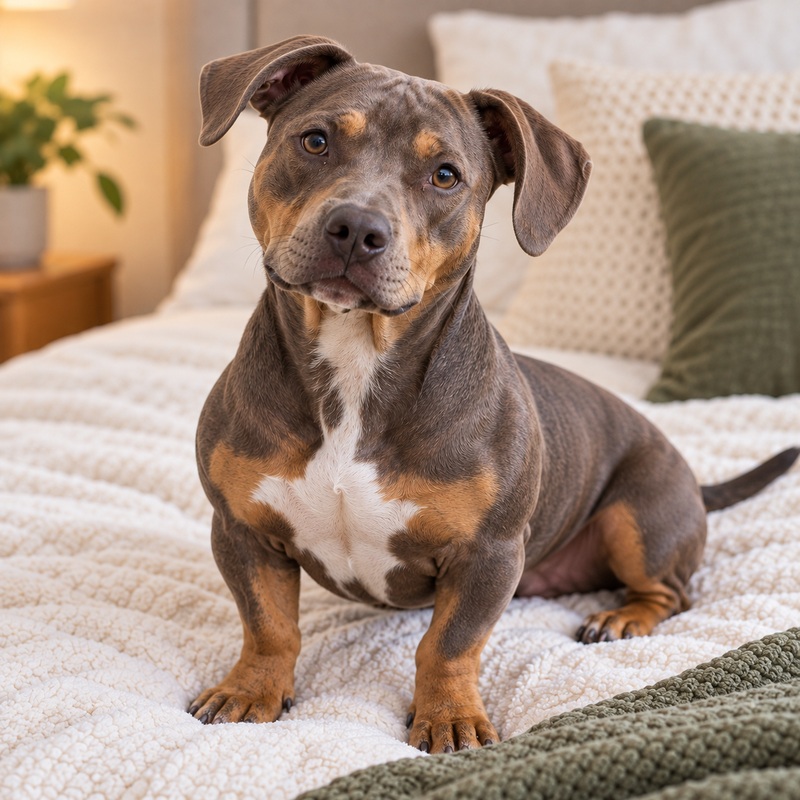
Dachshund Pit Bull Mix Size, Looks and Coat
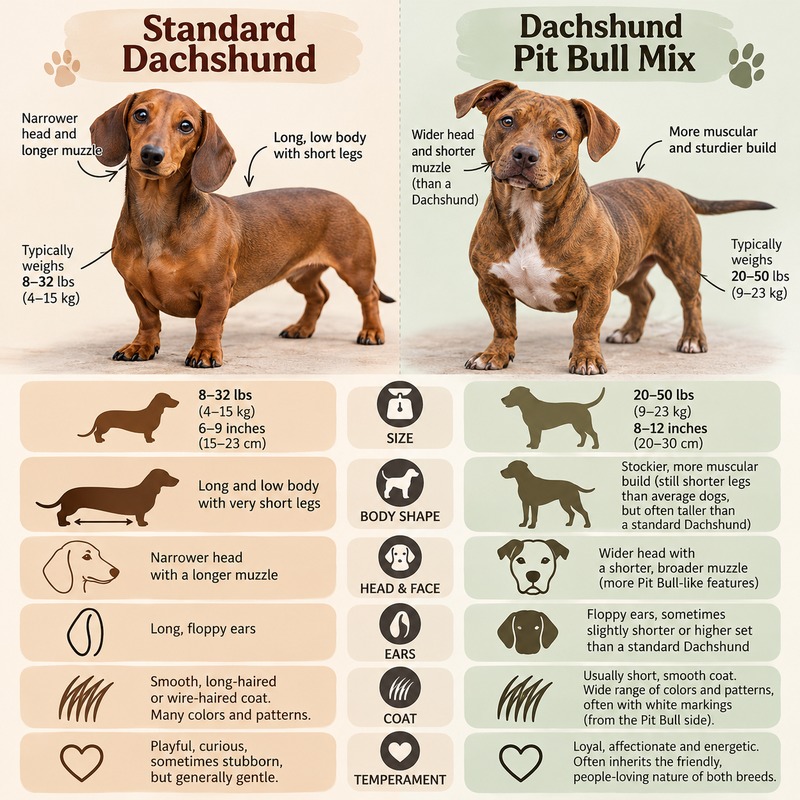
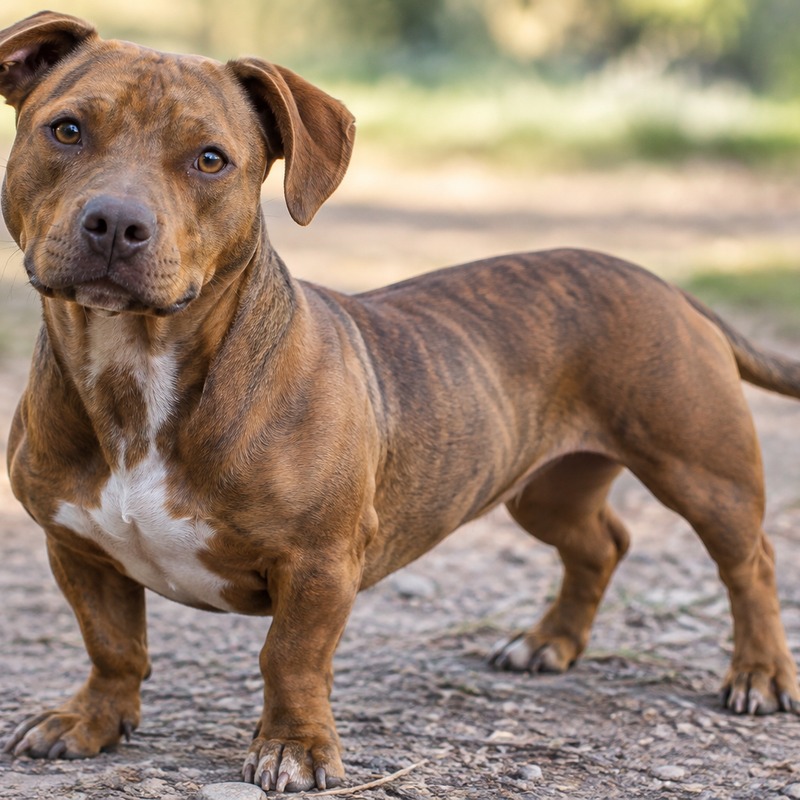
Most Doxie Pits look like a compact pit bull on short legs: broad head, deep chest, long body, and a whip of a tail. Those legs come from the dachshund, whose leg-shortening genes show even when a puppy inherits a single copy. One of those genes does more than shorten legs, as you’ll see in the health section.
That look is the opposite of what pit bull breeders aim for. The UKC breed standard treats short legs as an eliminating fault and lists dwarfism as a disqualification, because the breed is meant to be athletic.
| American Pit Bull Terrier | Standard dachshund | Miniature dachshund | Doxie Pit (estimate) | |
| Weight | 30–60 lb | 16–32 lb | 11 lb and under | Roughly 25–45 lb; smaller with a mini parent |
| Height | 17–21 in | 8–9 in | 5–6 in | Usually 10–16 in, low-slung |
| Lifespan | 12–14 years | 12–16 years | 12–16 years | Roughly 12–15 years |
| Coat | Short, smooth, stiff | Smooth, long or wire | Smooth, long or wire | Usually short; depends on the dachshund parent |
Coat is easier to predict than size:
- Smooth dachshund parent: expect a short, sleek coat like the pit bull’s.
- Longhaired dachshund parent: long hair is recessive, so puppies usually stay short-coated unless the pit parent quietly carries long hair too.
- Wirehaired dachshund parent: many pups get a scruffy, wiry coat and a beard, because the furnishings gene is dominant.
Colors vary widely: brindle, fawn, black, blue, red, white patches and more.
Does a Pit Bull Dachshund Mix Shed?
A little, all year, with a bit more in spring and fall. Pit bulls have a single coat and are fairly low shedders, according to Chewy’s vet-reviewed guide, and smooth dachshunds are similar. Neither parent is hypoallergenic, so the mix isn’t either.
Short coats are easy to keep, but the skin under them can be touchy. A simple routine:
- Brush once a week with a rubber mitt or bristle brush. Daily in shedding season.
- Bathe only every four to six weeks with a gentle, hypoallergenic shampoo. Too much bathing dries out sensitive skin.
- Check the skin for redness, bumps, or bald patches while you brush.
- Trim nails every few weeks and brush teeth several times a week.
Wiry-coated pups need hand-stripping or a trim a few times a year, plus a beard wipe after meals.
Temperament: A Pit Bull’s Heart With a Dachshund’s Opinions
Most Doxie Pits are total people dogs. The UKC describes the APBT as eager to please and famously friendly, even with strangers, and the dachshund adds courage, loyalty and a stubborn streak. Expect a clingy, clownish companion who follows you from room to room.
Plan for these traits:
- Prey drive, twice over. Both parents were bred to go after animals. Squirrels, cats and small pets can trigger chasing. Keep your dog leashed in unfenced areas, and use our 14-day recall plan for scent-driven dogs.
- Dog selectivity. The UKC standard itself notes that most APBTs show some dog aggression. Many Doxie Pits love other dogs, but some don’t. Early, careful socialization matters more than usual.
- Stubbornness. Dachshunds think for themselves. Short, fun sessions with food rewards work far better than harsh corrections.
- A big bark. If the dachshund side wins, expect an alert barker.
- Chewing. Bored pit mixes can be destructive. Sturdy chew toys and daily brain work help.
With kids, most are gentle and playful. Supervise young children, especially during rough play.
A quick word on reputation: a dog’s behavior depends on genetics, upbringing, and training, not a label. Judge the individual dog in front of you.
Dachshund Pit Bull Mix Health: Protect the Back First
IVDD (intervertebral disc disease) happens when the cushioning discs between the vertebrae degenerate and bulge or burst into the spinal canal. Dachshunds have 10–12 times the IVDD risk of other breeds, and an estimated 19–24% show signs in their lifetime, according to the DachsLife 2015 study led by the Royal Veterinary College.
Crossing with a pit bull doesn’t make that go away. CDDY, one of the dachshund genes behind those short legs, also makes the discs degenerate early. UC Davis reports that a single copy is enough to raise the risk of disc herniation. About 92% of the gene copies it has tested in dachshunds carry CDDY, compared with under 1% in American Pit Bull Terriers. That means roughly nine in ten Doxie Pit puppies inherit at least one copy from the dachshund parent.
There’s an extra twist with this cross. A pit bull’s muscle mass on a long, low frame means more weight riding on a vulnerable spine. And some dogs sold as “pit bulls” are really American Bullies, a breed where UC Davis found CDDY in about 9% of gene copies, so the risk can come from both sides.
Warning signs: a hunched back, reluctance to jump or use stairs, yelping when picked up, wobbly or dragging back legs, or sudden accidents indoors. Treat any of these as a same-day vet visit. Our guide to dachshund spine problems explains why speed matters.
What helps:
- Keep your dog lean. In Purina’s 14-year study of Labrador retrievers, lean-fed dogs lived a median of 1.8 years longer. You should be able to feel your dog’s ribs easily.
- Keep them moving. In DachsLife, dogs exercised for over an hour a day were less likely to have IVDD. It’s an association, not proof, but it’s no reason to keep your dog on the sofa.
- Use a harness, not a collar. Pit mixes can pull hard. Here’s how to choose a harness your dog can’t back out of.
- Add ramps or steps for beds, sofas and car seats.
- Lift with two hands: one under the chest and one under the rear, never under the belly alone. Teach kids to do the same.
- Test. Ask about the dachshund parent’s CDDY result, or test your dog. UC Davis recommends CDDY testing for mixed breeds too.
Then the pit bull side. Chewy’s vet-reviewed guide lists these common pit bull problems:
- Skin allergies to food, pollen, grass, fleas or dust mites, causing itching, redness and hair loss.
- Cranial cruciate ligament (CCL) tears in the knee, which usually need surgery. Explosive play and extra weight raise the risk.
- Hip dysplasia, an inherited joint problem that leads to arthritis.
- Zinc-responsive dermatosis, crusty skin on the face and paws that responds to zinc supplements.
- Cataracts in older dogs.
Hybrid vigor won’t save you here. It only helps with recessive conditions the two breeds don’t share, and CDDY is dominant.
Exercise and Everyday Care
This is an energetic mix. Purebred pit bulls need one to two hours of activity a day, and while the dachshund side tones that down, most Doxie Pits still want at least an hour, split between walks, play and brain games.
The trick is to tire them out without high-impact play:
- Good choices: long sniff walks, scent games, puzzle feeders, gentle tug on the ground, short training sessions and swimming in a fitted life jacket.
- Go easy on: frisbee leaps, jumping off furniture or out of cars, stairs at full speed, rough wrestling with big dogs and flirt-pole spins.
Gear takes some thought. Many Doxie Pits have a broad chest and thick neck on a long body, so standard sizes rarely fit. Measure before you buy, using our measuring guide. That goes for our dachshund harnesses too: check the size chart, since bigger Doxie Pits may need a larger size. For rest, see how orthopedic and cave beds compare.
Short coats offer little protection from the cold, so a coat helps in winter. Pit mixes are also great climbers and diggers, so check your fence before bringing one home.
Housing, Insurance and Breed Laws: Check Before You Adopt
This is the part most guides skip. If your Doxie Pit looks like a pit bull, some landlords, homeowners’ associations and insurers may treat it like one.
- Local laws. Some US cities and counties still restrict or ban pit bull-type dogs. Around 22 states now block local governments from passing breed-specific laws, according to the National Canine Research Council’s BSL map. In other states, it depends on your city.
- Rentals and HOAs. Even where breed laws are banned, private landlords can still refuse certain breeds. Get written permission before you adopt.
- Insurance. Some homeowners’ and renters’ policies exclude pit bull-type dogs or charge more. Call your insurer and ask how they classify mixes.
- Outside the US. The UK, for example, bans the pit bull terrier type under its Dangerous Dogs Act. Check your country’s rules.
If a landlord or insurer questions your dog’s breed, a breed DNA test and a written description from your vet can help.
How Much Is a Dachshund Pit Bull Mix?
There’s no breed club or price survey for this cross. Here’s what adopting one and keeping it healthy really costs:
| Cost | Typical range (US) | Notes |
| Adoption | About 50–300 | Typical fee for an adult dog; usually covers vaccines, spay/neuter and a microchip |
| Yearly care | $2,500+ | Our US estimate for a dachshund; allergy care can add more |
| IVDD treatment | 5,000–12,000 | Imaging, surgery, hospital stay and rehab combined |
For comparison, a purebred American Pit Bull Terrier puppy from a health-screened breeder costs 1,300–2,500.
One money tip: get pet insurance before your first vet visit, while your dog’s records are still clean. Pre-existing conditions are usually excluded, so check the waiting periods too.
Dachshund Pit Bull Mix for Sale? Why We Say Adopt Instead
Our position is simple: buying a Doxie Pit from a breeder funds backyard breeding of dogs with built-in back problems. It also puts dachshund mothers at risk, since carrying puppies sired by a much bigger dog can mean a difficult delivery.
There’s a second reason. Shelters already hold huge numbers of pit bull-type dogs, and they wait longer for homes. In a study of more than 900 dogs at two US shelters, dogs with pit bull-type ancestry took longer to be adopted than other dogs; at the San Diego shelter, more than three times as long. Every Doxie Pit bred for sale competes with a dog already waiting.
Watch for these red flags in “pit bull dachshund mix for sale” ads: the seller always has puppies, offers several “designer” mixes, won’t do a video call, wants payment by wire, gift card or crypto, or ships puppies sight unseen. A genuine rescue asks you questions, checks your home and has you sign an adoption contract.
To adopt, start with your local shelter and breed rescues such as Coast to Coast Dachshund Rescue, which places dachshund mixes. On Petfinder or Adopt-a-Pet, search for dachshund mixes and pit bull mixes and read the descriptions. Our dachshund adoption guide walks you through the process.
Is a Dachshund Pit Bull Mix Right for You?
A dachshund pit bull mix suits people who want a shadow: a dog that follows you from room to room, joins every walk and naps pressed against your leg. If you’re home a lot, enjoy training and like a dog with opinions, it can be a wonderful match.
Still on the fence? Meet a few adult pit and dachshund mixes at a rescue. With an adult dog, the size, coat and personality are already there for you to see.
FAQ
Is a Doxie Pit a good guard dog?
Not really. The UKC breed standard calls pit bulls a poor choice for guarding because they’re so friendly, even with strangers. Expect a loud welcome at the door, followed by a wagging tail.
When is a dachshund pit bull mix fully grown?
Most medium-sized dogs reach adult size at 12–15 months, according to PetMD. Your vet can confirm when your dog’s growth has finished at a routine checkup.
What should I feed a pit bull dachshund mix?
Pick a complete food that meets AAFCO standards for your dog’s life stage, and keep treats under 10% of daily calories, as Chewy’s vet-reviewed guide recommends. Ask your vet for a starting portion and adjust it as your dog grows.
How do I introduce a Doxie Pit to my other dog?
Go slowly. The ASPCA advises against first meetings in your house or yard, where the resident dog may feel territorial. Keep both dogs on leash, keep daily routines the same and give each dog one-on-one time. If either dog has a history of fighting, bring in a certified trainer or veterinary behaviorist first.
Can a Doxie Pit do dog sports?
Yes, and many love it. Pit bulls compete in obedience, rally, tracking and more, according to the UKC. For this mix, choose low-impact sports like nosework, rally obedience and tracking, and skip dock diving, weight pull and jump-heavy agility.



 Dachshund Jackets & Coats
 Dachshund Hoodies
 Dachshund Sweaters
 Dachshund Shirts
 Dachshund Life Jackets
 Dachshund Costumes
 Dachshund Pajamas

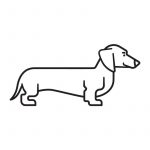
 Dachshund Harnesses
 Dachshund Collars



 Dachshund Backpacks