

Are Dachshunds Hypoallergenic? The Honest Truth (+ 10 Allergy Tips)


Are dachshunds hypoallergenic? No. Dachshunds aren’t hypoallergenic, and according to allergists, no dog breed truly is. Here’s the short version:
- What causes the sneezing: proteins in a dog’s saliva, skin flakes and urine, mainly one called Can f 1. Hair just carries them around.
- Coat type: Smooth, longhaired and wirehaired doxies differ in how much hair you’ll vacuum up, not in how allergenic they are. A wirehaired dachshund isn’t a proven allergy fix.
- The individual dog matters more than the breed. Allergen levels vary hugely from dog to dog, and some people react only to intact males.
- Can you still have one? Many people with mild allergies do, with an allergist’s plan, a dog-free bedroom, a HEPA purifier and frequent baths. With asthma or severe allergies, see an allergist before you adopt.
You’ve fallen for those short legs, and that big personality, but your nose has other plans. Before you search for a “hypoallergenic dachshund,” it helps to know what allergy specialists and researchers have actually found. This guide covers how dog allergies work, what each dachshund coat means for an allergic household and practical steps that are backed by evidence (plus a few popular tips that aren’t).
Updated: 10/21/2026

What Does “Hypoallergenic” Actually Mean for Dogs?
“Hypoallergenic” sounds medical, but for dogs it’s a marketing label with no official standard behind it. The American Academy of Allergy, Asthma & Immunology (AAAAI) states plainly that no dog is truly allergen-free. Breeds such as poodles, bichons and Maltese get the label because they shed less or have different coat textures, not because they produce fewer allergens.
Dog allergies aren’t rare, either. The AAAAI estimates that about 10% of Americans are sensitized to dogs.
Are Dachshunds Hypoallergenic? The Short Answer
No. Dachshunds produce the same allergy-causing proteins as every other dog. The AAAAI lists the main ones:
- Can f 1, made in the tongue and found in saliva, dander and hair. It’s the best known dog allergen.
- Can f 2, from the tongue and salivary glands.
- Can f 3, a protein from the dog’s blood.
- Can f 4 and Can f 6, found in skin, saliva and urine.
- Can f 5, made in the prostate of intact (unneutered) males and largely reduced after neutering.
These proteins get airborne easily and stick to clothes, carpets, furniture and even walls. That’s why a dog that barely sheds can still set off sneezing, itchy eyes or asthma symptoms.
So the honest answer to “are dachshunds hypoallergenic?” is no, but the more useful question is whether you can live comfortably with a particular dachshund. That depends on your allergy, the individual dog and your home.
What the Research Says About “Hypoallergenic” Breeds
Two studies changed how allergists talk about this.
The Detroit home study (2011). Researchers at Henry Ford Hospital measured Can f 1 in dust from the bedrooms of babies in 173 one-dog homes. Nearly all of them (94.2%) had detectable dog allergen, and whichever way the team grouped the breeds, homes with “hypoallergenic” dogs had no less allergen than homes with other dogs.
The Dutch coat study (2012). A team from Utrecht University compared hair and coat samples from almost 200 “hypoallergenic” dogs (Labradoodles, poodles, Spanish water dogs and Airedale terriers) with Labradors and other breeds. The so-called hypoallergenic dogs actually had higher Can f 1 levels in their coats. Allergen levels in the homes didn’t differ much between groups, except slightly lower floor dust in Labradoodle homes. The authors concluded there was no evidence for calling any breed hypoallergenic.
There’s another finding worth knowing. An earlier study, described by NPR, found that one poodle produced 60 times more allergen than another poodle. The lesson for dachshund lovers: the specific dog you meet matters far more than the breed name on the paperwork.
Smooth, Longhaired or Wirehaired: Does Coat Type Matter?
Dachshunds come in three coat varieties and two sizes, and you’ll often read that one of them is “best for allergies.” Here’s a more honest comparison.
| Coat | Grooming | What you’ll notice at home | Allergy reality |
|---|---|---|---|
| Smooth | An occasional rubdown or brushing | Short, fine hairs that weave into fabric and get everywhere | Still carries saliva and dander allergens |
| Longhaired | Daily brushing and combing | More visible hair, clumps you can pick up, mats if neglected | More coat to hold allergens and outdoor pollen |
| Wirehaired | Hand-stripping at least twice a year | Less loose hair day to day | Not proven to be lower-allergen; stripping releases a lot of hair at once |
Are wirehaired dachshunds hypoallergenic? Many sites, including an older version of this article, suggested the wirehaired coat is the safest bet. It’s true that the wiry coat often leaves less hair on your sofa, and UC Davis names the “furnishings” gene that wirehaired dogs carry as one of two genes with a real effect on shedding. But less hair isn’t the same as less allergen. Remember, the Dutch study found more Can f 1 in the coats of low-shedding breeds. If you choose a wirehair, have the stripping done outdoors or by a groomer, and not by the allergic person.
Are long haired dachshunds hypoallergenic? No. A long coat can trap more dander and pollen, and the daily brushing it needs should happen outside, by someone who isn’t allergic. Our guide to the best brush for a long haired dachshund can help you pick the right tool.
Are miniature dachshunds hypoallergenic? No. A miniature dachshund is simply a smaller body with the same proteins. A small dog does leave less hair around the house, but no study shows that small breeds cause fewer allergy symptoms.
Dachshund Habits That Matter More Than Their Coat
Here’s something most “are dachshunds hypoallergenic” articles skip: a dachshund’s personality can affect your exposure as much as its fur.
- They’re cuddlers. Doxies love laps, pillows and burrowing under blankets. Every snuggle puts allergen right next to your face, and bedding holds onto it.
- They lick, a lot. Saliva is a major source of Can f 1, and dachshunds are enthusiastic face-lickers. If you’re curious why, read why dachshunds lick so much.
- They want to be wherever you are. Dachshunds can be clingy, which makes a dog-free bedroom harder to keep than it sounds.
None of this is a deal-breaker. It just means an allergic doxie owner should plan for closeness, not assume a small dog will keep its distance.

Male or Female Dachshund: Can It Make a Difference?
It might. Remember Can f 5, the protein made in the prostate of intact male dogs? According to the AAAAI, about 20–30% of dog-allergic people are sensitive to it. Some of them react to only that protein, and those people may get on fine with a female dog or a neutered male.
A randomized trial in children who were sensitized only to Can f 5 found they reacted differently to male and female dog extract, which points to tolerance of female dogs.
The catch is that you can only know this through testing. Ask an allergist about component testing, which checks which dog proteins (Can f 1 through Can f 6) you react to. If Can f 5 is your only trigger, a spayed female or neutered male dachshund could be a realistic option.
How to Find Out If You Can Live With a Dachshund
Do this homework before you bring a dog home:
- See an allergist first. Testing tells you how sensitive you are and to which proteins. If you have asthma, this step isn’t optional.
- Meet the actual dog, more than once. Spend a few hours with the specific dachshund you’re considering, ideally indoors, on different days. Pay attention to how you feel that evening and the next morning.
- Ask about fostering first. Many rescues offer foster-to-adopt. Johns Hopkins pediatric allergist Dr. Robert Wood told NPR that a person can usually tell within about two weeks whether a dog triggers a reaction. Our dachshund adoption guide explains how to find a rescue.
- Be realistic about the commitment. Allergens linger long after a dog leaves. One report noted that it can take an average of 20 weeks for allergen levels to fall to those of pet-free homes. Returning a dog is stressful for everyone, so decide carefully.
10 Ways to Live With a Dachshund When You Have Allergies
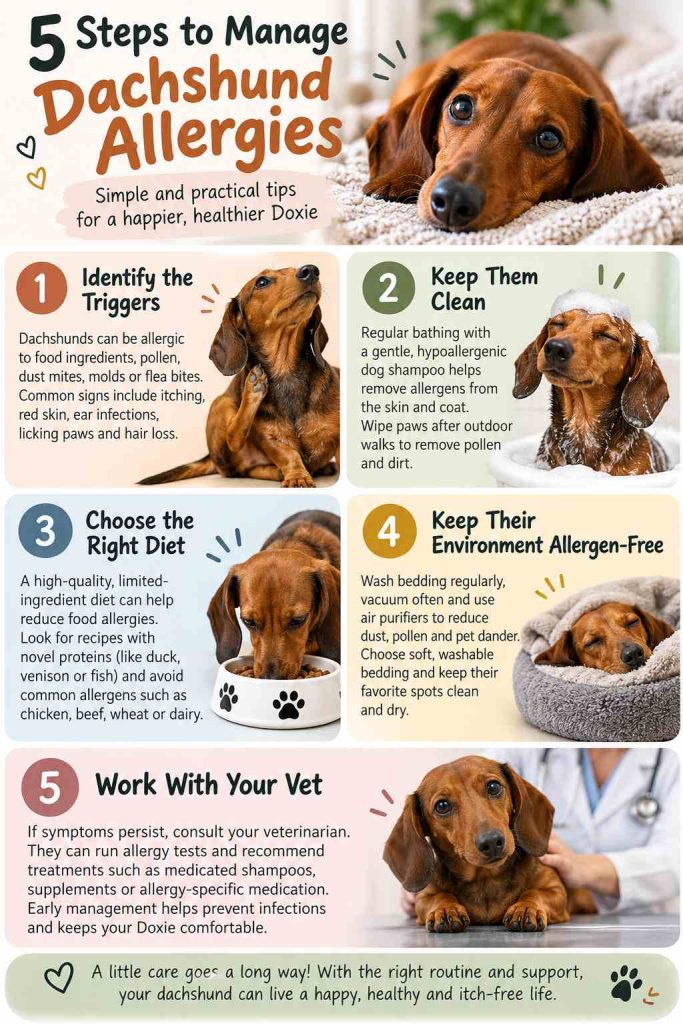
These tips won’t make any dog hypoallergenic, but together they can cut your exposure considerably.
- Keep the bedroom dog-free. You spend about a third of your life there. Give your doxie a cozy spot of its own instead, such as a cave bed or orthopedic bed, so burrowing happens in its bed, not yours.
- Bathe your dog twice a week. A study led by Manchester researchers found that washing cut allergen on the coat, but levels returned to baseline within about three days. Use a gentle dog shampoo and ask your vet before starting frequent baths, since overbathing can dry out the skin.
- Run a HEPA air purifier in the rooms where you and your dog spend the most time, and use a vacuum with a HEPA filter.
- Choose easy-clean surfaces. Allergens cling to carpets, rugs, curtains and upholstered furniture. Hard floors and washable throws on the sofa make life easier.
- Wash dog bedding weekly in hot water, along with your own sofa throws.
- Groom outdoors, and delegate it. If possible, someone without allergies should brush or strip your dachshund outside.
- Skip face licks and wash your hands after cuddles, especially before touching your eyes.
- Change clothes after long snuggles if your symptoms flare.
- Keep your dog’s skin healthy. Itchy, flaky skin means more dander. Regular vet visits and a complete diet help; ask your vet before adding supplements.
- Talk to your doctor about treatment. Medication and allergy shots (immunotherapy) can help manage symptoms.
What we’d skip: “dander-reducing” sprays and wipes. The evidence is thin. One tested allergen-reducing solution showed no reduction in Can f 1 on dogs’ coats after an hour or a week. Put the money toward a HEPA filter instead.
What If a Dachshund Isn’t the Right Fit?
If your allergist says your symptoms are too severe, switching to a “hypoallergenic” breed isn’t a guaranteed fix either. As the research above shows, a poodle or doodle can carry just as much allergen. Whatever breed you consider, the same rule applies: get tested, meet the specific dog and try fostering before you commit.
If you have mild symptoms, a good allergist and a willingness to vacuum, a dachshund can absolutely work. Plenty of allergic owners share their homes with doxies; they just do it with a plan.
FAQ
Are dachshunds hypoallergenic?
No. Dachshunds produce the same allergy-causing proteins as all dogs, found in saliva, dander and urine. Allergy organizations such as the AAAAI say no dog breed is truly hypoallergenic.
Are wirehaired dachshunds hypoallergenic?
No. Wirehaired dachshunds often leave less loose hair around the house, but there’s no evidence they produce fewer allergens. Low-shedding coats can even hold more allergen.
Are miniature dachshunds hypoallergenic?
No. Miniature dachshunds are smaller, so they leave less hair overall, but they make the same allergens as standard dachshunds.
Do dachshunds shed a lot?
Dachshunds are average shedders. Smooth coats shed short hairs year-round, longhaired coats need daily brushing, and wirehaired coats need hand-stripping at least twice a year.
Can I be allergic to one dachshund but not another?
Yes. Allergen levels vary a lot between individual dogs, even within one breed. Some people also react only to Can f 5, a protein made by intact male dogs, and may tolerate females or neutered males.
Are dachshund mixes like the doxiepoo hypoallergenic?
No. Crossing a dachshund with a poodle may change the coat, but research found poodles and doodles can carry as much allergen as other dogs, or more.
Are hairless dachshunds hypoallergenic?
There’s no recognized hairless dachshund, and even hairless dogs produce allergens in their skin and saliva. Read more in our article on whether hairless dachshunds are real.
Is it safe to get a dachshund if I have asthma?
Talk to your doctor or allergist first. Dog allergens can trigger asthma symptoms, so testing and a management plan should come before adoption.





 Dachshund Jackets & Coats
 Dachshund Hoodies
 Dachshund Sweaters
 Dachshund Shirts
 Dachshund Life Jackets
 Dachshund Costumes
 Dachshund Pajamas

 Dachshund Harnesses
 Dachshund Collars




 Dachshund Backpacks





2 thoughts on “Are Dachshunds Hypoallergenic? The Honest Truth (+ 10 Allergy Tips)”